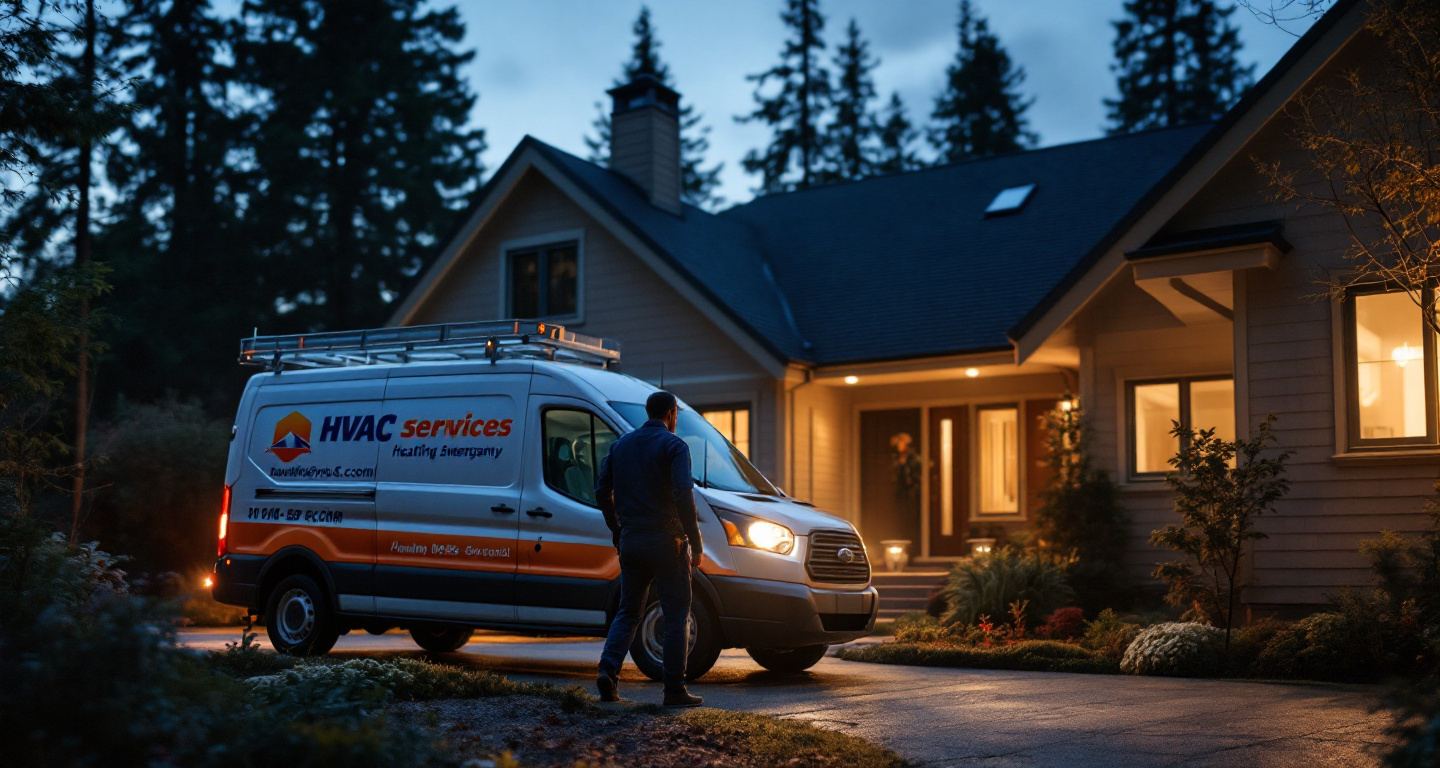
Schedule Professional Maintenance Before Each Season, Not After Something Breaks
The single most effective thing a PNW homeowner can do is schedule a professional tune-up in late summer and again in early fall. Late summer catches your cooling system before the next heat dome season, and early fall catches your heating system before the first cold snap settles in for weeks. Technicians are available and unhurried at those times. When you call in January because your furnace stopped during a freeze, you are competing with every other household in the region in crisis at the same moment.
What happens during a tune-up matters. A technician cleans components that lose efficiency when coated with debris, checks refrigerant levels, inspects electrical connections, tests ignition sequences, and catches developing problems while parts are still cheap. None of that happens when you skip the appointment and hope for the best. Budget for it the way you budget for a car oil change: routine, expected, and the cost of skipping it comes later.
Change Your Filter on a Real Schedule, Not When You Remember
A clogged filter is the root cause of a remarkable number of service calls. When airflow through a system becomes restricted, several bad things happen at once: the system works harder to move air, components overheat or ice over, efficiency drops, and wear accelerates. All of that from a filter that costs a few dollars.
Check your filter monthly during active heating and cooling seasons. PNW homes with pets or wildfire smoke in summer may need changes more often. Hold the filter up to light — if you cannot see light clearly through it, replace it. Put a reminder on your phone or tape a note to your thermostat. Whatever system gets it done consistently is the right system. More on carbon-monoxide safety is at https://www.epa.gov/indoor-air-quality-iaq/carbon-monoxides-impact-indoor-air-quality.
Give Your Outdoor Equipment Room to Breathe
Heat pumps and central air conditioners rely on outdoor units to exchange heat with outside air. When those units are crowded by blackberry canes, leaf debris, or stored items, efficiency drops and compressors run hot — and a compressor that runs hot fails early.
After the rainy season ends, clear any plant growth within a couple of feet and remove anything stacked against the unit. If the fins are visibly bent or matted with debris, a technician can straighten and clean them during your tune-up. Through summer, check occasionally that nothing has blown against the unit after windstorms.
Test Your System Before the First Extreme Day of the Year
The PNW pattern is predictable: months of mild weather followed by a sudden heat dome or a cold snap that drops temperatures faster than anyone expected. Homeowners who wait until that first extreme day to find out whether their system works are gambling. The first day of a heat dome is the worst possible time to discover your heat pump is blowing room-temperature air.
A few weeks before heat season, run your system in cooling mode on a mild day for fifteen minutes. Watch whether it reaches and holds the temperature you set. Do the same for heating before cold weather typically arrives. If something seems off, you have time to schedule a non-emergency service call and get parts before the repair queue is full.
Take Small Symptoms Seriously
Unusual sounds, smells, or behavior from your HVAC system are the equivalent of a warning light on a car dashboard. A system that cycles on and off more often than usual, a furnace that produces a faint burning smell at startup that persists past the first few minutes, a heat pump that is running constantly but not reaching the set temperature in reasonable conditions, or visible ice forming on refrigerant lines are all signs that something needs attention.
The pattern that creates expensive emergencies is consistent: a homeowner notices something small, assumes it will go away, and calls six weeks later when the system has failed completely. The part that would have cost a modest repair in week one now comes with collateral damage that multiplied the bill.
You do not need to diagnose the problem yourself. You need to call when something seems off rather than waiting until nothing works. That shift in habit determines whether your system serves you well for its full life or becomes a recurring source of expensive surprises.