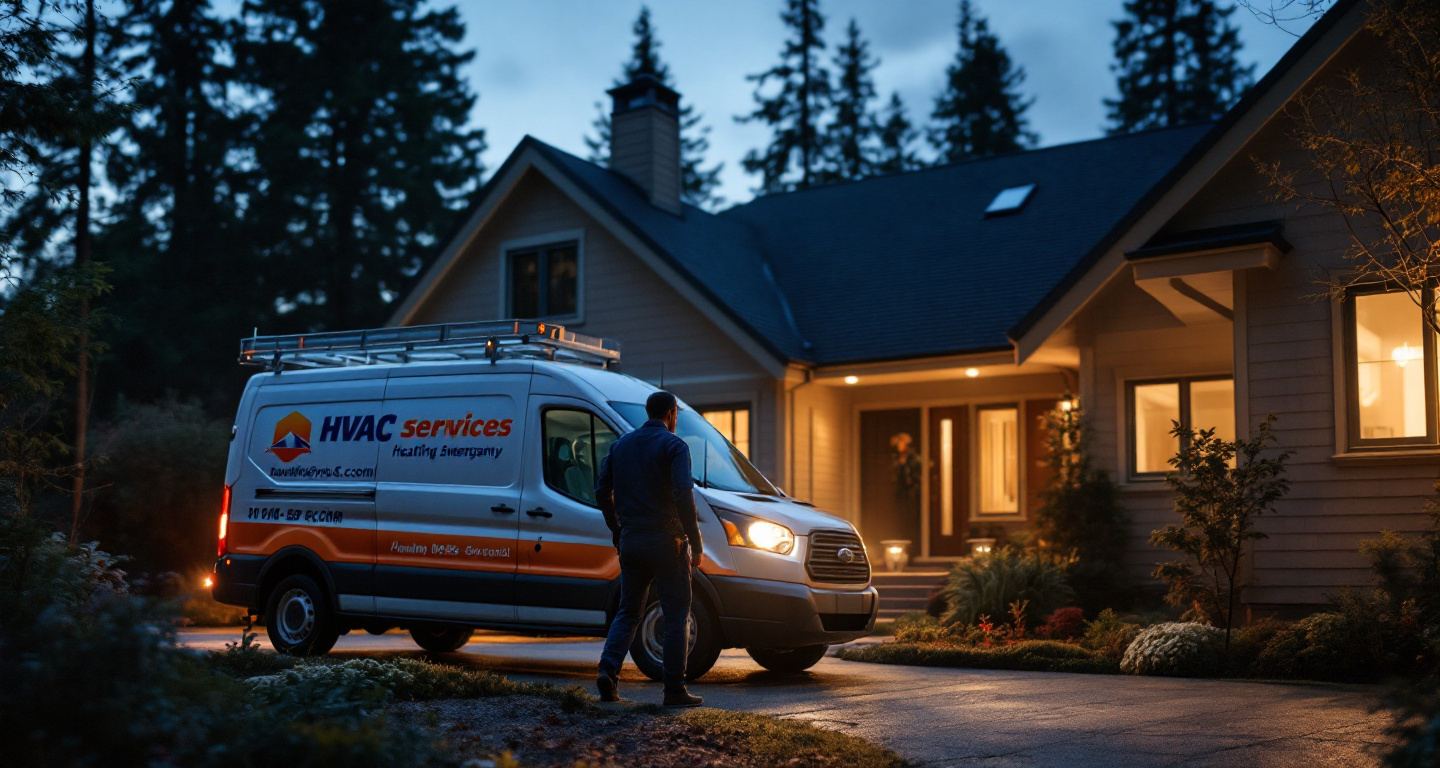
This guide is a calm, practical orientation. It will help you understand what is actually happening, what you can safely check in the next few minutes, and when a situation is serious enough to leave the house before you do anything else. A general overview of home heating and cooling systems is at this overview of home HVAC.
What Actually Counts as an HVAC Emergency
Not every mechanical failure is a crisis, but some situations demand immediate action before you troubleshoot anything.
A gas smell is always an emergency. Natural gas is odorized to smell faintly like rotten eggs. If you notice that smell near your furnace or anywhere in the house, do not touch light switches or use your phone indoors. Leave through the nearest exit and call your gas utility from outside.
A carbon monoxide alarm is an emergency. CO is odorless and colorless; a triggered alarm means you leave now. Fresh air first, then call for help from outside. Do not silence the alarm and go back to bed.
A burning smell or visible smoke from a vent or unit is urgent. Burning plastic or electrical smell near an air handler, furnace, or heat pump warrants turning the system off at the thermostat, then at the breaker, before calling for help. Do not run a unit that smells like it is overheating.
Active water flowing from your system also needs prompt attention. Some condensate dripping is normal around air handlers, but water pooling rapidly on the floor or dripping near electrical panels means shut the system off and call a technician.
After those four categories, the remaining situations are serious but not dangerous. No heat when overnight lows are dropping toward freezing is uncomfortable and potentially harmful over hours, especially for young children, older household members, or anyone with a medical condition. No cooling during a Pacific Northwest heat dome is a genuine health concern, because homes here are often poorly insulated against heat and outdoor temperatures can stay elevated through the night. Both situations deserve prompt attention.
Your First Few Minutes: Safety, Then Simple Checks
If you have ruled out the four emergencies above, you have a few minutes to do some basic checks before calling anyone. These will not fix most problems, but they can save you an unnecessary service call and give a technician useful information.
Check your thermostat. Make sure it is set to the correct mode and that the set temperature is where you expect. Batteries die and settings get bumped. This sounds obvious, but it is the first thing a technician will ask.
Check your breakers. HVAC equipment usually has its own dedicated circuit. A tripped breaker is easy to overlook. Find your electrical panel, look for any breaker in a middle position, flip it fully off, then back on. If it trips again immediately, stop and call a technician rather than continuing to reset it.
Check your air filter. A severely clogged filter can cause a furnace to shut itself off as a safety measure. If the filter looks dense and gray, replace it and give the system fifteen minutes before expecting a restart.
Check your outdoor unit if you have a heat pump. Some frost on a heat pump is normal and handled automatically. A unit completely encased in solid ice, or buried under heavy snow, may need clearing before it can operate. Remove snow gently by hand or soft brush. Never chip at the unit with tools.
If none of those steps resolve the problem, you have enough to make a clear call to a technician.
What This Guide Covers
The pages in this guide walk through each piece in more detail: how heat pumps behave differently in cold weather than gas furnaces do, why Pacific Northwest homes can overheat so quickly during a heat event even when temperatures feel moderate by other regions' standards, what to expect during a service call, how to stay safe while you wait for a repair, and how to approach temporary measures like portable heaters or fans without creating new hazards.
The goal throughout is to give you enough understanding to make good decisions under pressure, without steering you toward any particular brand or contractor. A homeowner who knows what questions to ask is better equipped than one who is simply told to call a number. That is what this guide is for. For a local example of emergency HVAC service in the Portland area, see https://sites.google.com/view/efficiency-heating-cooling/services/emergency-hvac.