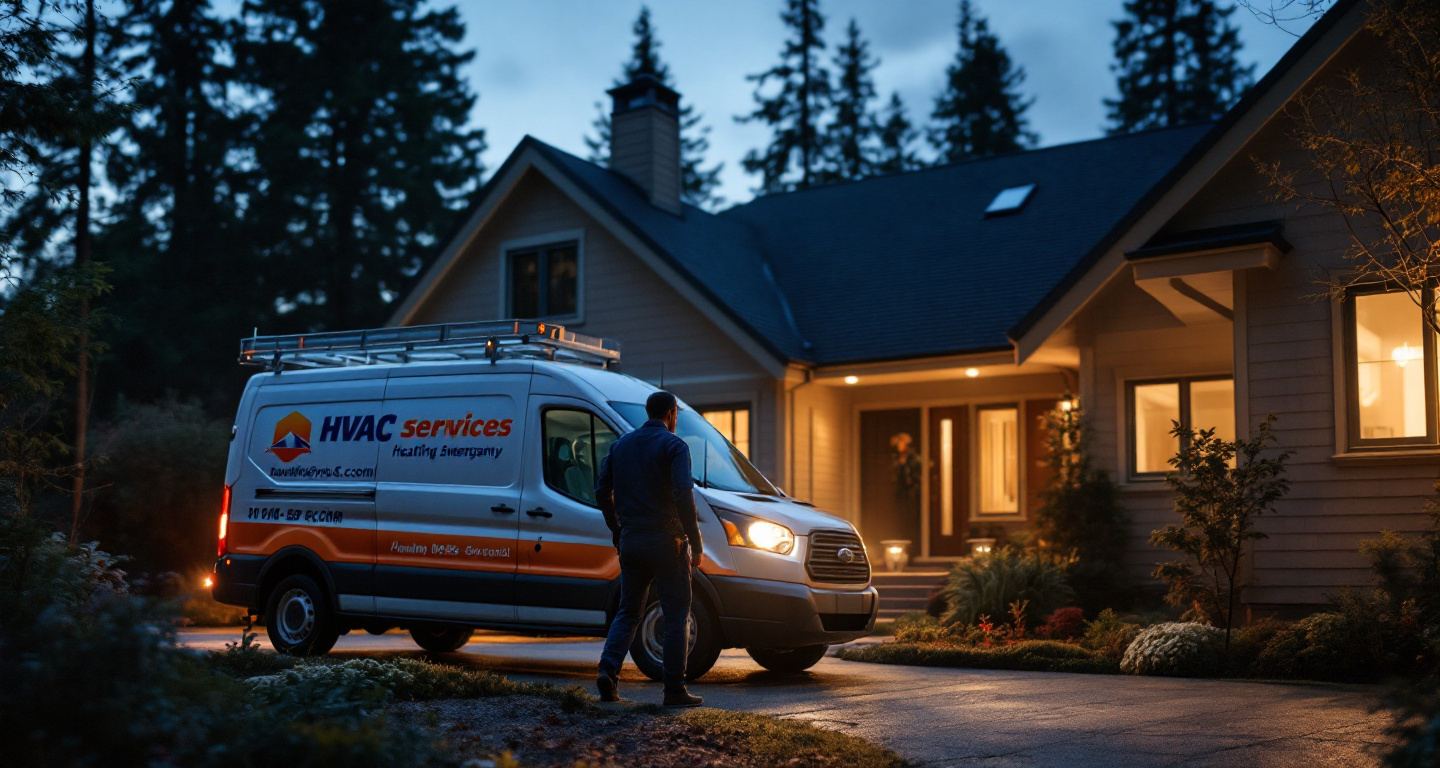
When an HVAC failure actually warrants an emergency call
Not every breakdown demands a midnight phone call, and emergency service carries a premium that is worth spending deliberately. The honest question is not whether you are uncomfortable but whether waiting until morning creates a genuine safety risk.
In the Pacific Northwest, winter is the higher-stakes season. When an ice storm rolls through the Cascades or a week of freezing fog settles into the Willamette Valley and your heat stops, the concern is real — but the timeline matters. A well-insulated home loses heat slowly. On a typical cold night in the thirties, most houses stay livable for several hours after the furnace goes quiet. That window is much shorter in older homes with single-pane windows or drafty crawl spaces.
Call for emergency service immediately when your household includes an infant, an elderly person, or someone with a medical condition who cannot safely tolerate temperature extremes. The same applies if the failure involves anything that smells like combustion gases or if a carbon monoxide detector has alarmed — that is a gas company and fire department call first, then HVAC second, from outside the home.
For summer failures, the calculus is different. The Pacific Northwest has relatively mild nights even during hot weeks, and natural ventilation often makes a broken air conditioner tolerable until morning. The exception is a heat event, when overnight lows stay dangerously warm and daytime highs are forecast to be severe. Those stretches are uncommon here but they do occur and justify an after-hours call.
If your household is healthy and able-bodied, the outdoor temperature is not extreme, and you can keep the space within a reasonable range using blankets, space heaters, or fans, the practical choice is usually to wait and schedule a morning appointment at standard rates. Background on heat-pump systems is at https://www.energy.gov/energysaver/heat-pump-systems.
What to expect when you call for after-hours service
Emergency HVAC dispatch works differently than a regular scheduled visit. Most companies that offer after-hours coverage route calls through an answering service that pages an on-call technician. Response times vary — you may wait anywhere from an hour to several hours depending on how many other calls are in the queue, the technician's location, and road conditions. Ask when you call what the realistic window is so you can plan accordingly rather than sitting by the door.
When the technician arrives, the first priority is diagnosis rather than repair. They will assess whether the problem is something they can fully fix that night or whether it requires a part that has to be ordered. Many after-hours calls result in a partial fix — getting the system running safely until a follow-up appointment during business hours. This is normal and not a sign of poor service. If they make a temporary repair and schedule a return visit, ask clearly what you should and should not run overnight and what warning signs mean you should shut the system off.
Keeping your household safe and comfortable overnight
While you wait for service or after a temporary fix, a few practical steps go a long way. In winter, close interior doors to concentrate warmth where people are sleeping. Electric space heaters can bridge the gap safely if you keep them on a hard floor, away from curtains or bedding, and never leave them unattended. Having everyone sleep in the same room is surprisingly effective in a cold house. If you have a gas fireplace with a standing pilot, it will often operate independently of your home's electrical system and can provide meaningful warmth during a power-related outage.
In summer, open windows on opposite sides of the house after dark to pull cooler outside air through. Box fans work better in exhaust mode — pointing out — when outdoor temperatures have dropped below indoor levels. Basements and lower floors stay cooler naturally.
Preparing before you make the call
A few minutes of preparation before dialing will speed the call and help the technician arrive ready. Know your system type — heat pump, gas furnace, electric furnace, or mini-split — and whether it is a combination heating and cooling unit. Find the age of the equipment if you can, often printed on a label inside the access panel. Note the make and model number from the same label.
Write down what happened: did the system stop mid-cycle, fail to start, or start making a new noise before it stopped? Check whether the thermostat display is functioning, whether any circuit breakers have tripped, and whether the filter is visibly clogged — these are the first things a technician will ask. Having those answers ready reduces the back-and-forth and helps the technician bring the most likely replacement parts on the first visit. A broader Portland-metro home-comfort overview is at https://sites.google.com/view/efficiency-heating-cooling.